 Zhcloudlink
Home / Technology / OpenCV vs YOLO: Knife-Holding Detection Algorithms, Implementation Workflow, and Comparison
Technology
OpenCV vs YOLO: Knife-Holding Detection Algorithms, Implementation Workflow, and Comparison
This article compares OpenCV-based traditional computer vision methods and YOLO-based deep learning methods for knife-holding detection, covering underlying principles, key implementation steps, code logic, and pros/cons. OpenCV is suitable for simple scenes and rule-based tasks, while YOLO achieves higher accuracy and robustness in complex backgrounds, varied poses, and real-time video scenarios. In practical deployments, AI edge computing boxes, AI access control systems, and cameras commonly

1. OpenCV-Based Traditional Computer Vision Method
1.1 Underlying Principles
Traditional computer vision methods rely on handcrafted features and rules for object detection. Knife-holding detection generally includes:
1. **Background subtraction**: separate foreground moving objects from the static background;
2. **Object detection**: identify objects such as people and knives;
3. **Feature extraction and matching**: extract knife shape and texture features to verify whether the object is a knife;
4. **Action analysis**: analyze temporal sequences to determine knife-holding behavior.
1.2 Implementation Workflow
(1) Background Subtraction
Use algorithms such as MOG2 or KNN to extract moving regions from video frames and ignore the static background.
```python
import cv2
cap = cv2.VideoCapture("video.mp4")
fgbg = cv2.createBackgroundSubtractorMOG2()
while True:
ret, frame = cap.read()
if not ret:
break
fgmask = fgbg.apply(frame)
cv2.imshow("Foreground Mask", fgmask)
if cv2.waitKey(30) & 0xFF == ord("q"):
break
cap.release()
cv2.destroyAllWindows()
```
(2) Object Detection
Use Canny edge detection, contour detection, template matching, or shape analysis to locate possible knife regions.
```python
edges = cv2.Canny(frame, 100, 200)
contours, _ = cv2.findContours(
edges, cv2.RETR_EXTERNAL, cv2.CHAIN_APPROX_SIMPLE
)
for contour in contours:
x, y, w, h = cv2.boundingRect(contour)
if w > 50 and h > 10: # Assume the knife aspect ratio meets certain conditions
cv2.rectangle(frame, (x, y), (x + w, y + h), (0, 255, 0), 2)
```
(3) Feature Extraction and Matching
HOG can be used for shape feature extraction, while SIFT or ORB can be used for feature matching to verify whether the detected object is a knife.
```python
sift = cv2.SIFT_create()
kp1, des1 = sift.detectAndCompute(template_image, None)
kp2, des2 = sift.detectAndCompute(frame, None)
bf = cv2.BFMatcher(cv2.NORM_L2, crossCheck=True)
matches = bf.match(des1, des2)
```
(4) Action Analysis
By tracking the relationship between human keypoints (e.g., hand position) and knife position, the system can determine whether a knife-holding action occurs. Optical flow can be used to track the trajectories of the knife and hand.
```python
prev_gray = cv2.cvtColor(prev_frame, cv2.COLOR_BGR2GRAY)
next_gray = cv2.cvtColor(next_frame, cv2.COLOR_BGR2GRAY)
flow = cv2.calcOpticalFlowFarneback(
prev_gray, next_gray, None, 0.5, 3, 15, 3, 5, 1.2, 0
)
```
2. YOLO-Based Deep Learning Method
2.1 Underlying Principles
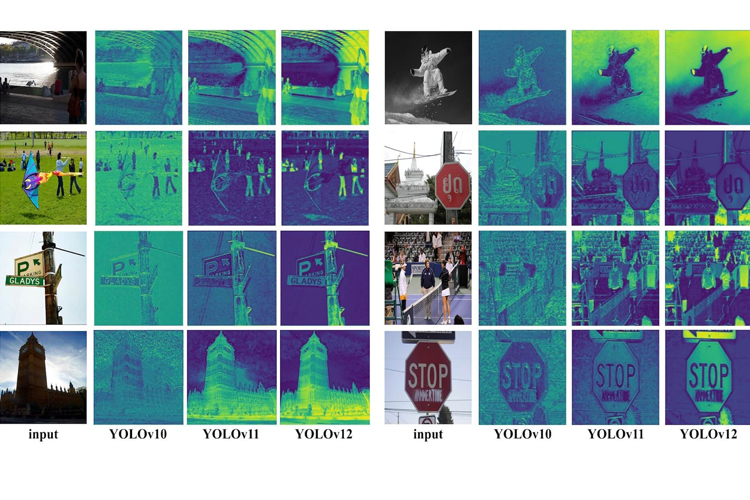
Deep learning methods use neural networks to automatically learn features, avoiding the complexity of handcrafted feature design. YOLO (You Only Look Once) is a real-time object detection algorithm that formulates object detection as a regression problem and directly predicts object categories and bounding boxes, making it suitable for dynamic video scenes.
2.2 Implementation Workflow
(1) Data Preparation
- Collect a large number of videos or images containing knife-holding actions;
- Annotate knives and human key parts such as hands;
- Apply data augmentation such as rotation, scaling, and flipping to improve generalization.
(2) Model Training
YOLOv5 or YOLOv7 can be used to train a custom dataset. Define labels in YOLO format and specify the number of classes, such as "person" and "knife".
```bash
git clone https://github.com/ultralytics/yolov5
cd yolov5
pip install -r requirements.txt
python train.py --img 640 --batch 16 --epochs 50 \
--data custom_data.yaml --cfg models/yolov5s.yaml --weights yolov5s.pt
```
(3) Inference and Post-Processing
Load the trained model, run inference on video frames, filter person and knife bounding boxes, and determine whether the knife is near a human hand.
```python
import torch
model = torch.hub.load("ultralytics/yolov5", "custom", path="best.pt")
results = model(frame)
detections = results.xyxy[0].numpy()
person_box, knife_box = None, None
for detection in detections:
x1, y1, x2, y2, conf, cls = detection
if cls == 0: # Assume 0 means "person"
person_box = [x1, y1, x2, y2]
elif cls == 1: # Assume 1 means "knife"
knife_box = [x1, y1, x2, y2]
if person_box and knife_box and is_holding(person_box, knife_box):
print("Detected holding a knife!")
```
(4) Action Analysis
Keypoint detection models such as OpenPose or MediaPipe can be used to obtain hand positions. Combined with knife detection boxes, the system can determine whether the knife is close to the hand.
```python
import mediapipe as mp
mp_hands = mp.solutions.hands.Hands()
results = mp_hands.process(frame_rgb)
if results.multi_hand_landmarks:
for hand_landmarks in results.multi_hand_landmarks:
hand_x = hand_landmarks.landmark[
mp.solutions.hands.HandLandmark.INDEX_FINGER_TIP
].x
hand_y = hand_landmarks.landmark[
mp.solutions.hands.HandLandmark.INDEX_FINGER_TIP
].y
# Determine whether the knife is close to the hand
```
3. Comparison Between OpenCV and YOLO
| Dimension | OpenCV Traditional Method | YOLO Deep Learning Method |
|---|---|---|
| Feature source | Handcrafted features and rules | Automatically learned neural network features |
| Suitable scenarios | Simple backgrounds and rule-based scenes | Complex backgrounds, varied poses, real-time video |
| Data requirements | Relatively low | Requires large annotated datasets |
| Computing resources | Usually lower | Higher computing power for training and inference |
| Accuracy and robustness | Weaker adaptability to complex scenes | Higher accuracy and robustness |
| Engineering deployment | Suitable for prototyping and simple detection | Suitable for edge boxes, access control, and cameras |
4. Practical Deployment
In practical applications, AI edge computing boxes, AI access control systems, and cameras can load knife-holding detection algorithms. Current solutions commonly use YOLO to detect knife-holding behavior and combine hand keypoints to determine the positional relationship between the knife and the hand, thereby reducing false positives and improving detection performance.
## 5. SEO/TKD English Version
> TKD = Title / Keywords / Description
- **Title:** OpenCV vs YOLO: Knife-Holding Detection Algorithms, Implementation Workflow, and Comparison
- **Keywords:** OpenCV knife detection, YOLO knife-holding detection, computer vision, object detection, action recognition, edge AI, AI access control
- **Description:** This article compares OpenCV-based traditional computer vision and YOLO-based deep learning for knife-holding detection, covering underlying principles, implementation steps, code examples, pros and cons, and practical deployment in AI edge boxes, access control systems, and cameras.
## 6. Q&A English Version
**Q1: What is the main difference between OpenCV and YOLO for knife-holding detection?**
A1: OpenCV relies on handcrafted features and rules such as background subtraction, edge detection, contour analysis, and HOG/SIFT/ORB, making it suitable for simple backgrounds and rule-based scenes. YOLO automatically learns features through neural networks and directly predicts object categories and bounding boxes, making it more suitable for complex backgrounds, varied poses, and real-time video.
**Q2: Why is YOLO commonly chosen for practical knife-holding detection deployment?**
A2: YOLO provides higher accuracy and robustness in complex scenes, and there are many public datasets and mature training frameworks for engineering implementation. In practice, it can be combined with hand keypoint detection such as MediaPipe to determine whether the knife is close to a hand, thereby reducing false positives.
**Q3: How can knife-holding detection accuracy be improved and false positives reduced?**
A3: Optimization can be done from three aspects: data, model, and post-processing. Collect and annotate more multi-scene data and apply data augmentation; train and tune models such as YOLOv5/YOLOv7; and use the spatial relationship among hand keypoints, person bounding boxes, and knife bounding boxes for post-processing to reduce false positives caused by single-frame knife detection.
Questions
What is the main difference between OpenCV and YOLO for knife-holding detection?
OpenCV relies on handcrafted features and rules such as background subtraction, edge detection, contour analysis, and HOG/SIFT/ORB, making it suitable for simple backgrounds and rule-based scenes. YOLO automatically learns features through neural networks and directly predicts object categories and bounding boxes, making it more suitable for complex backgrounds, varied poses, and real-time video.
Why is YOLO commonly chosen for practical knife-holding detection deployment?
YOLO provides higher accuracy and robustness in complex scenes, and there are many public datasets and mature training frameworks for engineering implementation. In practice, it can be combined with hand keypoint detection such as MediaPipe to determine whether the knife is close to a hand, thereby reducing false positives.
How can knife-holding detection accuracy be improved and false positives reduced?
Optimization can be done from three aspects: data, model, and post-processing. Collect and annotate more multi-scene data and apply data augmentation; train and tune models such as YOLOv5/YOLOv7; and use the spatial relationship among hand keypoints, person bounding boxes, and knife bounding boxes for post-processing to reduce false positives caused by single-frame knife detection.