 Zhcloudlink
Home / Technology / What Is a GPU? What Is an NPU? GPU vs NPU
Technology
What Is a GPU? What Is an NPU? GPU vs NPU
A GPU (graphics processing unit) and an NPU (neural processing unit) are different kinds of processors. Both speed up computation, but they differ in design goals, architecture, and the jobs they are built for.
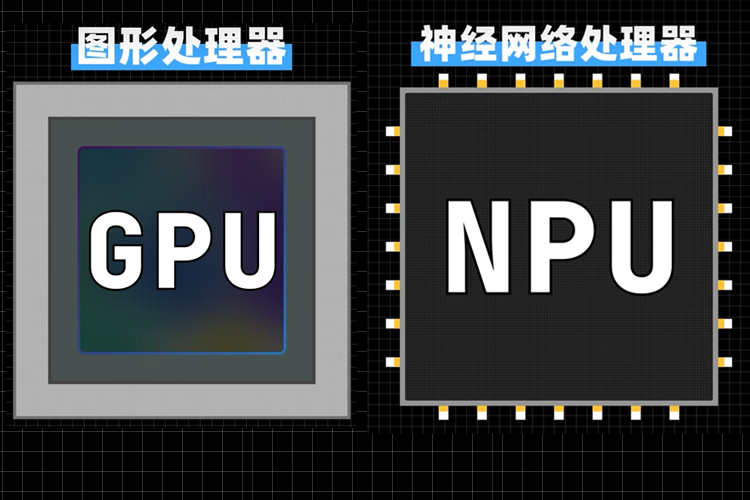
A GPU (graphics processing unit) and an NPU (neural processing unit) are different kinds of processors. Both speed up computation, but they differ in design goals, architecture, and where they are used. The comparison below looks at those differences in detail.
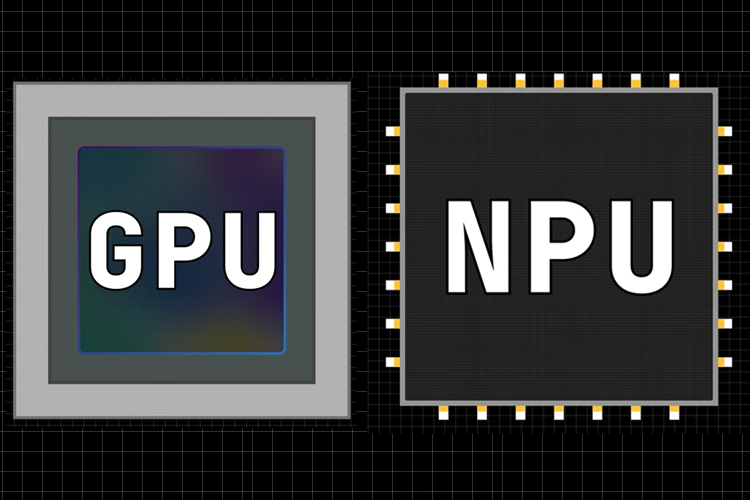
1. Design goals
GPU
- A GPU was first designed to speed up graphics rendering. It is mainly used for parallel work in computer graphics, such as vertex transforms, lighting, and texture mapping.
- As the hardware matured, that same throughput was applied to general-purpose computing on GPUs (GPGPU): scientific computing, deep-learning training, video encoding and decoding, and similar jobs.
NPU
- An NPU is a processor designed to accelerate artificial intelligence and machine learning, especially neural-network inference and training in deep learning.
- Its architecture is optimized for matrix operations, convolution, and activation functions, so it can meet the compute needs of neural-network models efficiently.
2. Architecture
GPU
- A GPU’s defining feature is a large number of small compute units (CUDA cores or stream processors) that run many simple calculations at the same time.
- GPUs use a SIMD (single instruction, multiple data) or SIMT (single instruction, multiple threads) architecture, which fits highly parallel work.
- The memory hierarchy is complex: global memory, shared memory, registers, and more. Developers often manage memory explicitly to get the best performance.
- A GPU is flexible enough for many kinds of parallel work, but it is not specialized for AI.
NPU:
- An NPU is built for neural-network math. It usually contains large arrays of multiply-accumulate (MAC) units for matrix multiplication and convolution.
- NPUs usually include dedicated hardware for specific AI operations such as ReLU, softmax, and pooling.
- The dataflow is arranged to cut the cost of moving data between memory and compute units, which improves performance per watt.
- The instruction set and hardware are more specialized. They run particular neural-network models well, and they offer limited support for other kinds of work.
3. Performance and efficiency
GPU
- A GPU offers very high compute throughput and suits large parallel jobs.
- For deep-learning training, the GPU is still the usual choice. It can support many model architectures, and the software stack is mature (CUDA, cuDNN, and others).
- Power draw is high, so a GPU can be a poor fit for phones and embedded systems.
NPU:
- An NPU is strong at neural-network inference, especially at low power, as in smartphones and IoT devices.
- Because it is specialized, an NPU’s energy efficiency on those AI tasks is far higher than a GPU’s. Inference is often faster, and energy use is lower.
- That advantage shows up mainly at inference time. For training, an NPU is usually behind a GPU.
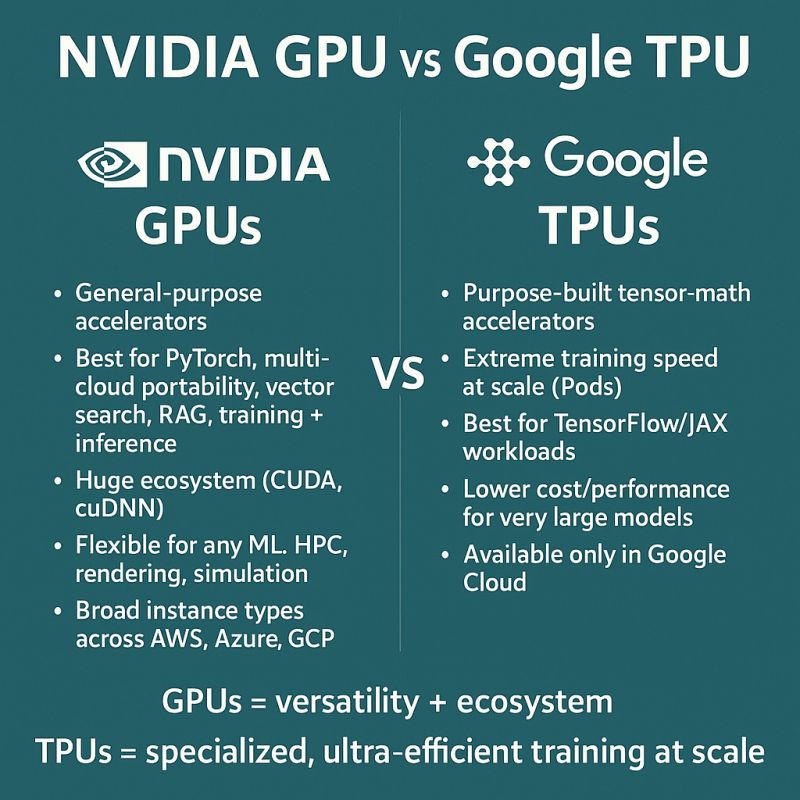
4. Applications
GPU
- Graphics: games, 3D modeling, animation, and similar work.
- Scientific computing: molecular simulation, climate projection, physics simulation, and similar work.
- Deep learning: model training and large-scale data processing.
- Video: encoding and decoding, image enhancement, and similar work.
NPU:
- AI inference: voice assistants, image recognition, natural language processing, and similar products.
- Embedded AI: smartphones, smart home devices, autonomous driving, drones, and similar devices.
- Edge computing: real-time AI inference on the device, with less dependence on the cloud.
5. Ecosystem and tools
GPU
- GPUs have a mature ecosystem. NVIDIA’s CUDA platform, for example, provides libraries (cuDNN, TensorRT, and others), a toolchain, and support for several languages (C, C++, Python, and others).
- Developers can write custom algorithms and adapt them to different compute needs.
NPU:
- The NPU ecosystem is newer. The chip vendor usually supplies a dedicated SDK and toolchain, such as Huawei’s Da Vinci architecture or Google’s Edge TPU tools.
- Developers tune the model to that NPU. There is less flexibility, and deployment is faster.
6. Typical products
GPU
- NVIDIA: GeForce (consumer) and Tesla / A100 / H100 (data center).
- AMD: Radeon (consumer) and Instinct (data center).
NPU:
- Apple: Neural Engine, integrated in the A-series and M-series chips.
- Huawei: Ascend series.
- Google: Edge TPU.
- Qualcomm: Hexagon DSP (some versions include NPU functions).
In short, a GPU fits general-purpose computing and deep-learning training. An NPU fits AI inference and low-power devices. Each has strengths. The right choice depends on the application and the hardware around it.
Questions
What is a GPU?
A GPU (graphics processing unit) was first designed to speed up graphics rendering. It handles parallel work in computer graphics, such as vertex transforms, lighting, and texture mapping. Because that parallel throughput is so high, GPUs are also used for general-purpose computing (GPGPU), including scientific computing, deep-learning training, and video encoding and decoding.
What is an NPU?
An NPU (neural processing unit) is a processor built to accelerate artificial intelligence and machine learning, especially neural-network inference and training. Its architecture is tuned for matrix math, convolution, and activation functions, so it can run neural-network models efficiently.