 Zhcloudlink
Home / Technology / DeepFace Facial Attribute Analysis: The Technology Behind Gender Prediction, Age Estimation, and Seven-Class Facial Expression Recognition
Technology
DeepFace Facial Attribute Analysis: The Technology Behind Gender Prediction, Age Estimation, and Seven-Class Facial Expression Recognition
With the rapid development of artificial intelligence, computer vision, and deep learning, facial analysis has evolved beyond traditional face detection and identity recognition. Modern AI systems can extract additional visual attributes from facial images, including estimated age, predicted gender categories, and facial expression classifications.
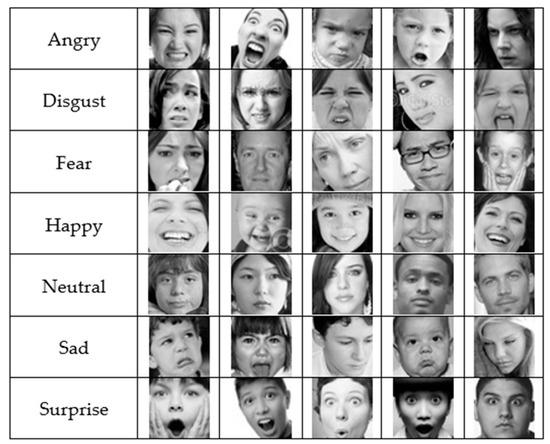
With the rapid development of artificial intelligence, computer vision, and deep learning, facial analysis has evolved beyond traditional face detection and identity recognition. Modern AI systems can extract additional visual attributes from facial images, including estimated age, predicted gender categories, and facial expression classifications.
DeepFace is an open-source Python framework that integrates multiple deep learning models for face detection, face recognition, face verification, and facial attribute analysis. Its facial analysis capabilities include age estimation, gender prediction, and seven-class facial expression recognition.
By combining face detection, facial alignment, image preprocessing, convolutional neural networks, and classification algorithms, DeepFace can analyze facial images captured by conventional cameras and convert visual information into structured AI-generated results.
This article explains the underlying technologies behind DeepFace, including how neural networks learn facial features, how gender categories are predicted, how apparent age is estimated, and how seven facial expression categories are classified. It also explores real-time video processing, system optimization, practical applications, technical limitations, and deployment considerations.
1. What Is DeepFace?
DeepFace is an open-source facial recognition and facial attribute analysis framework for Python, developed by Sefik Ilkin Serengil.
It is not a single facial recognition neural network. Instead, it provides a unified software interface for integrating multiple face detection, face recognition, and facial attribute analysis models.
Its major capabilities include:
- Face Detection
- Face Recognition
- Face Verification
- Age Estimation
- Gender Prediction
- Facial Expression Recognition
- Facial Attribute Analysis
For face recognition, DeepFace supports several well-known models, including VGG-Face, FaceNet, OpenFace, DeepFace, DeepID, ArcFace, Dlib, SFace, GhostFaceNet, and Buffalo_L.
For face detection, it supports multiple backends, including OpenCV, SSD, MTCNN, RetinaFace, Dlib, MediaPipe, YOLO, and CenterFace.
An important distinction is that face recognition models and facial attribute analysis models are not necessarily the same neural networks. DeepFace loads the appropriate model according to the requested analysis task.
This modular architecture allows developers to build image-based analysis applications, real-time video analytics systems, and more comprehensive AI-powered surveillance solutions using a consistent Python interface.
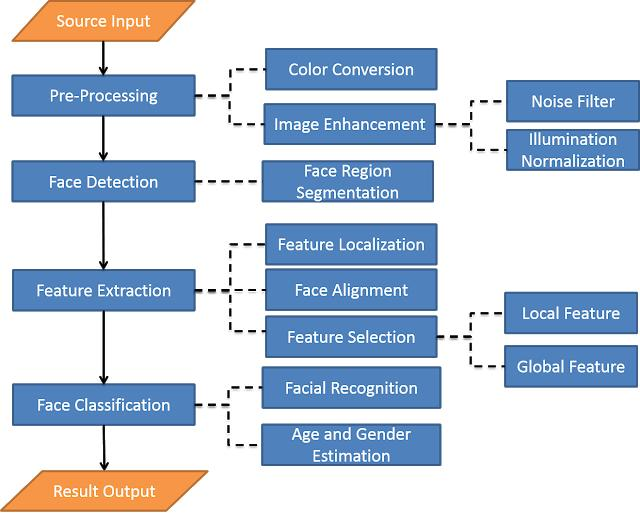
2. Overall Architecture of Facial Attribute Analysis
A typical facial attribute analysis pipeline consists of several computer vision stages, starting with image acquisition and ending with structured prediction results.
Stage 1: Image Acquisition
The system receives image data from an IP camera, USB camera, video file, or image source.
For network cameras, RTSP is commonly used to access the video stream.
After video decoding, the system obtains a sequence of image frames that can be processed by computer vision algorithms.
Stage 2: Face Detection
A face detection model identifies human faces and determines their locations within an image.
Each detected face is usually represented by a bounding box containing:
- X: Horizontal coordinate of the top-left corner.
- Y: Vertical coordinate of the top-left corner.
- W: Width of the detected face.
- H: Height of the detected face.
For example, if an image contains five people, the face detector can identify five individual face regions for subsequent analysis.
Stage 3: Face Alignment
After detecting a face, the system may perform facial alignment to reduce the impact of head rotation and pose variations.
Facial landmarks, such as eye positions, nose location, and mouth coordinates, can be used to estimate the orientation of the face.
Geometric transformations are then applied to produce a more standardized facial image.
For example, if a person tilts their head to one side, the alignment process can estimate the rotation angle based on the eye positions and correct the image accordingly.
Proper alignment can improve the consistency of facial feature extraction.
Stage 4: Image Preprocessing
Deep learning models generally require standardized input dimensions and pixel formats.
Therefore, the system performs several preprocessing operations:
- Face cropping.
- Image resizing.
- Color channel conversion.
- Pixel normalization.
- Padding when necessary.
These operations ensure that the input image is compatible with the selected neural network.
Stage 5: Deep Learning Inference
The preprocessed facial image is passed to the corresponding attribute analysis models.
Separate models can be used for:
- Gender prediction.
- Age estimation.
- Facial expression classification.
Each model has its own learned parameters and prediction mechanism.
The models may operate independently or be integrated into a shared feature extraction architecture.
Stage 6: Result Generation
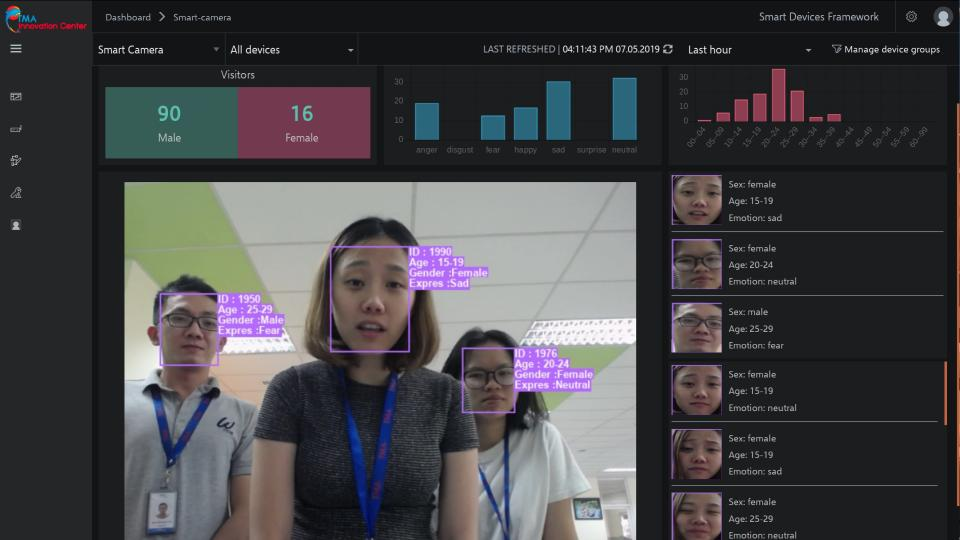
The system converts model predictions into structured output, including:
- Estimated age.
- Predicted gender category.
- Gender prediction scores.
- Seven facial expression scores.
- Dominant expression category.
- Face bounding box coordinates.
- Face detection confidence.
This process transforms ordinary camera images into structured visual analytics data.
3. How Deep Learning Extracts Facial Features
To understand how DeepFace analyzes facial images, it is important to understand Convolutional Neural Networks (CNNs).
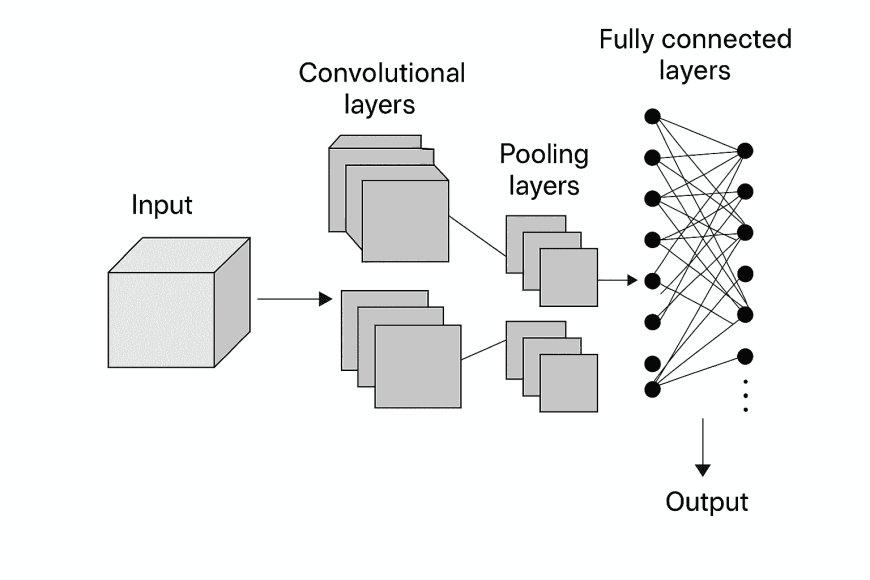
CNNs are among the most widely used deep learning architectures in computer vision. They are extensively applied in image classification, object detection, face recognition, and facial expression analysis.
Traditional image processing often depends on manually engineered features, such as:
- Facial contours.
- Distances between facial landmarks.
- Eye and eyebrow shapes.
- Nose and mouth structures.
- Skin texture.
- Local color and brightness variations.
Manually designed features can be difficult to maintain across different lighting conditions, facial poses, and individual appearances.
CNNs use a different approach.
Instead of requiring engineers to define every important facial feature, the network learns useful visual representations automatically from large datasets of labeled images.
3.1 Convolutional Layers
Convolutional layers apply trainable filters to the input image to extract local visual information.
Early layers generally learn simple patterns, including:
- Edges.
- Lines.
- Contours.
- Textures.
- Color transitions.
- Brightness variations.
As the network becomes deeper, these low-level features are combined into more complex representations.
For facial analysis, deeper layers may learn patterns associated with eye shapes, eyebrow positions, mouth structures, facial contours, and relationships between different facial regions.
A simplified convolution operation can be represented as:
Y(i,j) = ΣΣ X(i+m,j+n) × K(m,n)
Where:
- X represents the input image.
- K represents the convolution kernel.
- Y represents the resulting feature map.
- i and j represent positions in the output feature map.
The convolution kernel weights are learned during model training rather than manually specified.
3.2 Activation Functions
Neural networks use nonlinear activation functions to learn complex relationships between input features and output predictions.
One commonly used activation function is ReLU:
ReLU(x) = max(0,x)
It preserves positive activation values and converts negative values to zero.
3.3 Pooling Layers
Pooling layers reduce the spatial dimensions of feature maps while retaining important visual information.
Max Pooling is a commonly used method.
Reducing feature map dimensions can lower computational requirements and improve the efficiency of the network.
3.4 Fully Connected Layers
After multiple stages of convolution and feature extraction, the network maps learned visual representations into task-specific output categories.
For example:
- A gender model produces two category scores.
- An expression model produces seven category scores.
- An age model produces an estimated age.
The major advantage of CNNs is their ability to learn complex visual representations directly from image data.
4. How DeepFace Predicts Gender
Gender analysis is generally treated as an image classification task.
DeepFace processes a detected and preprocessed facial image through its Gender model and produces predictions for two model-defined categories:
- Man
- Woman
4.1 Underlying Prediction Mechanism
The model does not rely on a single fixed facial characteristic.
Instead, it learns statistical visual patterns associated with the labels in its training dataset.
These patterns may include:
- Overall facial shape.
- Eye and eyebrow regions.
- Nose structure.
- Mouth and surrounding areas.
- Facial texture and local appearance.
- Relationships between different facial regions.
The neural network learns associations between these visual characteristics and its training labels.
During inference, the facial image passes through the CNN feature extraction network, producing a high-dimensional representation.
A classification layer then converts this representation into two category scores.
4.2 Softmax Classification
Suppose the final layer generates two raw output values:
Z = [z1, z2]
A Softmax function converts these values into normalized scores:
P(i) = e^zi / Σj e^zj
Where:
- P(i) is the model output score for a category.
- zi is the corresponding raw output.
- The normalized scores sum to 1.
For example:
- Man: 92.5%
- Woman: 7.5%
The system selects Man as the dominant predicted category.
However, these values should not automatically be interpreted as perfectly calibrated real-world probabilities.
They represent the model's relative output scores under its training and classification assumptions.
4.3 Factors Affecting Gender Prediction
Prediction performance depends on both the training dataset and the quality of the input image.
Important factors include:
- Camera resolution.
- Face size in the image.
- Lighting conditions.
- Facial occlusion.
- Head rotation.
- Glasses, masks, and hats.
- Differences across age groups and populations.
- Training dataset representation.
For example, a face occupying only a few dozen pixels in a distant surveillance image may be detected successfully, but the available visual information may not be sufficient for reliable attribute prediction.
Production systems should therefore consider face quality, image resolution, and prediction scores together.
It is also important to understand that the model's binary gender prediction does not establish a person's gender identity.
5. How DeepFace Estimates Age
Age estimation is a more complex visual prediction task than binary gender classification.
Gender prediction selects between two model-defined categories, whereas age estimation attempts to predict a numerical value based on facial appearance.
For example:
- 18 years.
- 25 years.
- 35 years.
- 50 years.
- 65 years.
A neural network cannot directly read a person's date of birth from a facial image.
Instead, it learns statistical relationships between facial appearance and age labels in its training data.
The result is an estimated apparent age, not a verified chronological age.
5.1 How the Age Model Learns
Age estimation models are trained using facial images associated with age labels.
For example:
| Training Sample | Age Label |
|---|---|
| Sample A | 18 |
| Sample B | 25 |
| Sample C | 35 |
| Sample D | 50 |
| Sample E | 65 |
During training, the network learns visual patterns that correlate with different age groups.
Potential visual cues include:
- Skin texture.
- Wrinkle patterns.
- Changes around the eyes.
- Facial contours.
- Skin elasticity and appearance.
- Facial fat distribution.
- Other age-associated visual characteristics.
These are statistical visual cues rather than universal biological rules.
Different individuals can have significantly different facial appearances at the same chronological age.
5.2 Age Prediction Mechanism
DeepFace's classic Age model uses a neural-network-based age prediction approach.
Its classic implementation represents ages from 0 to 100 as discrete age categories and derives an estimated age from the model output.
One possible estimation mechanism is an expected-value calculation:
Age = Σ(i × P(i))
Where:
- i represents an age category.
- P(i) represents the corresponding model output weight.
- Age represents the estimated result.
For example:
| Age Category | Model Output Weight |
|---|---|
| 25 | 10% |
| 26 | 20% |
| 27 | 40% |
| 28 | 20% |
| 29 | 10% |
The estimated age is:
Age = 25×0.1 + 26×0.2 + 27×0.4 + 28×0.2 + 29×0.1
The result is 27 years.
This approach uses information from multiple age categories rather than selecting only the category with the highest score.
The precise output implementation should always be checked against the installed model version and its source code.
5.3 Why Can Age Estimation Be Inaccurate?
Age estimation is based on visual appearance rather than a direct measurement of biological age.
Its performance may be affected by:
- Individual skin conditions.
- Lighting and shadows.
- Camera resolution.
- Makeup.
- Facial hair.
- Glasses.
- Facial occlusion.
- Population differences.
- Imbalanced age distributions in training data.
For example, two people who are both 35 years old may have very different facial appearances.
The model may therefore produce different estimated ages.
Age estimation is more appropriate for aggregate audience analytics and approximate age-group research than for identity verification or legal age verification.
6. How DeepFace Recognizes Seven Facial Expressions
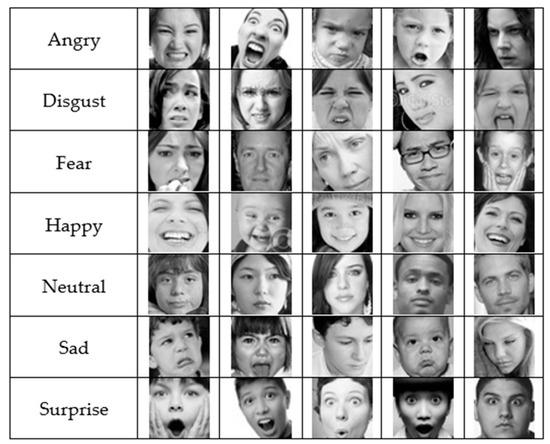
Facial expression recognition is one of the important capabilities of DeepFace's facial attribute analysis module.
Its Emotion model classifies facial images into seven predefined categories.
These categories are commonly referred to as the seven basic facial expression classes.
| Category | Description | Typical Visual Patterns |
|---|---|---|
| Angry | Anger-related expression | Furrowed brows, tightened facial muscles |
| Disgust | Disgust-related expression | Nose wrinkling, upper lip movement |
| Fear | Fear-related expression | Widened eyes, raised brows, open mouth |
| Happy | Happiness-related expression | Raised mouth corners, lifted cheeks |
| Sad | Sadness-related expression | Inner brow movement, lowered mouth corners |
| Surprise | Surprise-related expression | Raised eyebrows, widened eyes, open mouth |
| Neutral | Neutral expression | No strong visual pattern matching the other classes |
These descriptions represent common visual patterns. They should not be treated as mandatory facial movements for every individual.
6.1 The Technical Principle of Facial Expression Recognition
DeepFace sends the detected and preprocessed facial image into a dedicated facial expression classification model.
The neural network extracts visual information at multiple levels.
Level 1: Low-Level Visual Features
The network extracts edges, contours, textures, and brightness variations around the eyes, eyebrows, nose, and mouth.
Level 2: Local Facial Structure Features
It learns visual patterns such as eye openness, eyebrow positions, mouth shape, and other local facial movements.
Level 3: Combined Facial Features
The network combines information from multiple facial regions to identify more complex patterns.
For example, it may consider the relationship between eyebrow position, eye openness, and mouth shape rather than relying on a single feature.
Level 4: Expression Classification
The extracted feature representation is passed through a classification layer, which produces scores for the seven expression categories.
6.2 Seven-Class Classification Algorithm
Suppose the extracted facial feature vector is:
F = [f1, f2, ..., fn]
The neural network produces seven raw output values:
Z = [z1, z2, z3, z4, z5, z6, z7]
The Softmax function converts them into seven normalized scores:
P(i) = e^zi / Σj=1^7 e^zj
A sample result may look like this:
- Angry: 5%
- Disgust: 2%
- Fear: 3%
- Happy: 78%
- Sad: 4%
- Surprise: 3%
- Neutral: 5%
Because Happy has the highest score, the system selects Happy as the dominant expression.
This means the observed facial image has a visual pattern that the model associates most strongly with its Happy training category.
It does not prove that the person is psychologically happy.
6.3 Why Use Seven Expression Categories?
Categorizing facial expressions into seven classes converts complex visual information into structured data that can be processed by software systems.
These outputs can support:
- Facial expression statistics.
- Video scene analytics.
- Facial attribute aggregation.
- Visual analytics dashboards.
- Human-computer interaction.
- Research and interactive applications.
However, seven categories cannot represent every possible human emotional experience.
Real-world facial movements can be mixed, subtle, ambiguous, or influenced by individual and cultural differences.
6.4 Facial Expression Recognition Is Not Direct Emotion Detection
This distinction is essential when developing commercial facial analysis systems.
A facial expression is an observable visual pattern.
A person's actual psychological state is a much more complex phenomenon involving psychological, physiological, and environmental factors.
A smile may indicate happiness, but it may also be associated with politeness, social behavior, or other circumstances.
Likewise, a neutral facial appearance does not mean that a person has no emotions.
A more scientifically appropriate description is:
Facial Expression Classification, rather than definitive detection of a person's internal emotional state.
In the 2019 review titled Emotional Expressions Reconsidered: Challenges to Inferring Emotion From Human Facial Movements, published in Psychological Science in the Public Interest, Barrett and colleagues discussed the limitations of treating facial movements as universally reliable indicators of specific emotional states.
Consequently, commercial systems should use terms such as:
- Facial Expression Analysis.
- Facial Expression Recognition.
- AI-Based Facial Expression Classification.
They should avoid claiming that an algorithm can directly and reliably read a person's inner emotions.
7. How DeepFace Models Are Trained
The ability to predict facial attributes comes from training neural networks on large collections of labeled facial images.
The training process allows the model to learn statistical relationships between image features and target labels.
7.1 Training Datasets
Different tasks require different training labels.
For example:
- Gender model: Facial image + gender category.
- Age model: Facial image + age label.
- Expression model: Facial image + expression category.
The quality, diversity, and representativeness of the training data have a direct impact on model generalization.
7.2 Forward Propagation
During training, facial images are passed through the neural network.
The network processes the images through convolutional layers, activation functions, pooling operations, and subsequent layers.
It then generates a prediction.
For an expression classification model, the output contains seven category scores.
7.3 Loss Function
The predicted result is compared with the actual training label.
For classification tasks, cross-entropy loss is commonly used:
L = -Σ yi log(pi)
Where:
- yi represents the ground-truth label.
- pi represents the predicted score for the correct category.
- L represents the prediction loss.
Age estimation may use mean squared error, mean absolute error, or other loss functions depending on the model design.
7.4 Backpropagation
After calculating the loss, the system uses backpropagation to calculate gradients for the network parameters.
An optimizer then updates the weights to reduce prediction errors.
Common optimizers include SGD and Adam.
This process is repeated over many training samples until the training process reaches its stopping criteria.
7.5 Transfer Learning
Transfer learning is an important technique in facial attribute analysis.
A neural network can first be trained on a large face dataset to learn general visual representations.
The learned network can then be adapted to a specific task, such as gender classification or age estimation.
Some existing layers can be retained while the output layers are replaced or fine-tuned for the new task.
According to the official DeepFace project documentation, its age, gender, and race attribute models use VGG-Face as a backbone through transfer learning.
The Emotion model has its own dedicated implementation. It is therefore inaccurate to describe all four attribute models as identical VGG-Face networks.
Transfer learning reduces the amount of training data and computational resources required compared with training every model from scratch.
8. DeepFace Python API and Analysis Output
DeepFace provides a relatively simple Python interface for complex facial analysis operations.
Example:
from deepface import DeepFace

result = DeepFace.analyze(
    img_path="face.jpg",
    actions=["age", "gender", "emotion"],
    detector_backend="retinaface",
    enforce_detection=True,
    align=True
)

for face in result:
    print("Age:", face["age"])
    print("Gender:", face["dominant_gender"])
    print("Emotion:", face["dominant_emotion"])

    print("Emotion scores:")
    print(face["emotion"])
This code performs the following operations:
- Loads the input image.
- Detects faces using RetinaFace.
- Aligns and preprocesses the detected faces.
- Estimates age.
- Predicts the gender category.
- Classifies the seven facial expressions.
- Returns structured analysis results.
An illustrative output may look like this:
[
  {
    "age": 28,
    "dominant_gender": "Man",
    "gender": {
      "Man": 92.5,
      "Woman": 7.5
    },
    "dominant_emotion": "happy",
    "emotion": {
      "angry": 5.0,
      "disgust": 2.0,
      "fear": 3.0,
      "happy": 78.0,
      "sad": 4.0,
      "surprise": 3.0,
      "neutral": 5.0
    },
    "region": {
      "x": 120,
      "y": 80,
      "w": 180,
      "h": 210
    }
  }
]
This is an illustrative example of the output structure, not a result from a real test.
Actual API fields and supported model implementations may change between software versions.
9. How to Perform Real-Time Facial Attribute Analysis Using Ordinary Cameras
DeepFace can process video streams as well as static images.
A real-time video analytics system generally contains several components.
9.1 Camera Video Stream Access
The application obtains video streams from IP cameras using RTSP.
The cameras do not necessarily need built-in facial recognition algorithms.
A conventional network camera can serve as the image acquisition device, while facial analysis is performed by a separate software platform.
The video quality must still be sufficient for reliable face detection and attribute prediction.
9.2 Video Decoding
Components such as FFmpeg or OpenCV decode the RTSP stream into sequential image frames.
9.3 Face Detection
The system does not necessarily need to execute every analysis model on every frame.
A lightweight face detector can first identify faces and determine which regions are suitable for further processing.
9.4 Face Tracking
For continuous video analysis, a tracking algorithm such as ByteTrack or DeepSORT can be integrated.
Each tracked face receives a temporary Track ID.
This allows the system to associate multiple detections across consecutive frames without treating every frame as a completely new observation.
9.5 Facial Attribute Inference
Selected frames are processed by the age, gender, and expression models.
For repeated observations of the same tracked face, temporal aggregation can be used to reduce prediction fluctuations.
For example:
- Calculate the median of multiple age predictions.
- Aggregate gender prediction scores across frames.
- Apply temporal smoothing to expression scores.
- Exclude low-quality face images from final statistics.
9.6 Structured Data and Visualization
The results can be stored in a database, message queue, or video management platform.
For example:
{
  "camera_id": "CAM_001",
  "track_id": "TRACK_0001",
  "timestamp": "2026-11-29T10:00:00",
  "estimated_age": 28,
  "predicted_gender": "Man",
  "dominant_expression": "Happy",
  "face_quality": 0.95
}
This approach allows conventional cameras that originally provide only video footage to support additional AI-powered visual analytics through software integration.
10. How to Improve Prediction Performance
A deep learning model is only one part of a complete facial analysis system.
Real-world performance also depends on camera configuration, image quality, video processing, and computing architecture.
10.1 Improve Facial Image Quality
Face size is an important factor.
When a face occupies too few pixels, details around the eyes, eyebrows, and mouth may not be sufficiently visible.
Recommended improvements include:
- Selecting an appropriate camera mounting height.
- Adjusting camera angles.
- Ensuring that faces appear within the effective viewing area.
- Avoiding strong backlighting.
- Reducing motion blur.
- Selecting an appropriate focal length.
10.2 Select an Appropriate Face Detector
DeepFace supports multiple detection backends.
Different detectors have different characteristics in terms of speed, accuracy, resource consumption, and performance under challenging conditions.
Examples include:
- OpenCV: Suitable for some lightweight deployment scenarios.
- SSD: Useful when balancing speed and detection performance.
- MTCNN: Supports face detection and landmark localization.
- RetinaFace: Provides strong face detection and landmark localization capabilities.
- MediaPipe: Useful for certain real-time computer vision applications.
The best option should be determined through actual testing using the target cameras and deployment environment.
10.3 Use Multi-Frame Video Analysis
Single-frame predictions can be affected by temporary facial movements or image noise.
For continuous video, multiple observations associated with the same Track ID can be aggregated.
For age estimation:
Age_final = Median(Age_1, Age_2, ..., Age_n)
For expression prediction, exponential smoothing can be applied:
P_final(t) = αP(t) + (1-α)P_final(t-1)
Where:
- P(t) represents the current frame prediction.
- P_final(t) represents the smoothed output.
- α represents the smoothing coefficient.
This approach can reduce unstable predictions caused by temporary image changes.
10.4 Optimize Computing Resources
When analyzing multiple camera streams simultaneously, several optimization techniques can be considered:
- GPU inference.
- ONNX Runtime.
- TensorRT.
- OpenVINO.
- Batch inference.
- Asynchronous video decoding.
- Multithreaded scheduling.
- Separate face detection and attribute analysis services.
For resource-constrained edge devices, model quantization, pruning, and lightweight network architectures may also be considered.
However, converted and quantized models must be tested again for accuracy, latency, and stability.
A smaller model does not automatically guarantee the same prediction quality as the original model.
11. Practical Applications of DeepFace
11.1 Smart Retail and Customer Traffic Analytics
In shopping malls, supermarkets, and retail stores, conventional cameras can provide visual data for aggregate facial attribute analysis.
Possible applications include:
- Estimated age-group distribution.
- Distribution of predicted gender categories.
- Traffic patterns across different time periods.
- Facial expression category statistics.
These insights may help retailers understand visitor demographics and evaluate store layout or marketing activities.
Aggregate statistics should be preferred over unnecessary individual identity profiling.
11.2 Smart Commercial Spaces
In exhibition halls, commercial centers, and service areas, AI video analytics can provide supplementary information about visitor traffic and facial expression patterns.
For example, operators may review the distribution of expression classifications during different periods.
These indicators should be treated as supplementary observations rather than direct measurements of customer satisfaction or psychological states.
11.3 Smart Transportation and Public Spaces
At transportation hubs and other public facilities, AI video analytics can detect faces and perform attribute analysis when image quality is sufficient.
Combined with people counting, intrusion detection, and crowd density analysis, these capabilities can support more comprehensive video analytics systems.
11.4 Human-Computer Interaction
In smart terminals, self-service kiosks, and interactive display systems, facial analysis can provide supplementary visual input.
Potential applications include:
- Adjusting interface content according to estimated age groups.
- Adapting interaction feedback to observable facial changes.
- Providing aggregated visual data for research and testing.
Users should be appropriately informed, and suitable choice mechanisms should be provided.
11.5 AI Cameras and Video Management Platforms
DeepFace can also be integrated into existing video surveillance systems.
By adding software-based AI analytics, conventional network cameras can provide additional visual analysis capabilities through a separate processing platform.
Organizations therefore do not necessarily need to replace all their existing cameras immediately.
They can extend their current video infrastructure according to specific business requirements.
12. Technical Limitations and Deployment Considerations
Although DeepFace provides convenient facial analysis capabilities, commercial deployment requires careful consideration of several limitations.
First: Model predictions are not verified personal attributes.
Age is an apparent-age estimate. Gender is a model-defined visual classification. Facial expression classification cannot establish a person's actual psychological state.
Second: Image quality directly affects performance.
Low resolution, side profiles, occlusion, backlighting, and motion blur may reduce prediction reliability.
Third: Training data distribution matters.
Model performance may vary across populations, age groups, skin tones, camera types, and environmental conditions.
Fourth: Real-time video processing requires computing resource management.
Running face detection and all three attribute models on every frame of every camera stream may create substantial CPU and GPU workloads.
Fifth: Model licensing must be reviewed.
The DeepFace framework itself is distributed under the MIT License. However, third-party models and pretrained weights may have different licensing conditions.
Before commercial deployment, developers should independently review the licenses of the software, model weights, datasets, and dependencies.
Sixth: Privacy and data protection must be considered.
Facial images and facial analysis data may constitute sensitive personal information, depending on the applicable legal framework.
System designers should evaluate the legal basis for processing, transparency requirements, data minimization, retention periods, access controls, and security safeguards.
Local processing or the use of conventional cameras does not automatically remove privacy and data protection obligations.
In workplaces, schools, and public spaces, organizations should carefully assess whether facial analysis is necessary and whether less intrusive alternatives are available.
13. Conclusion
DeepFace integrates multiple deep learning technologies into a unified facial analysis framework.
It enables developers to process ordinary images and camera video streams to perform face detection, gender category prediction, age estimation, and seven-class facial expression classification.
The complete technology pipeline involves face detection, landmark localization, face alignment, image preprocessing, CNN-based feature extraction, and task-specific classification or regression.
The three major analysis functions work as follows:
- Gender analysis learns statistical relationships between facial visual features and two model-defined classification labels.
- Age estimation predicts apparent age based on learned relationships between facial appearance and age labels.
- Seven-class facial expression recognition analyzes local and global facial patterns to produce predictions for Angry, Disgust, Fear, Happy, Sad, Surprise, and Neutral.
The real value of this technology lies in its ability to transform conventional camera footage into structured visual analytics data.
This provides a technical foundation for smart retail, customer traffic analysis, intelligent commercial spaces, human-computer interaction, and AI-powered video management platforms.
With continued developments in lightweight neural networks, GPU inference, edge computing, and video analytics platforms, facial attribute analysis can be integrated into increasingly flexible camera and software solutions.
DeepFace represents a shift from simply detecting faces to extracting richer, structured visual information from camera images.
References
- DeepFace Official GitHub Repository: https://github.com/serengil/deepface
- DeepFace Python Package: https://pypi.org/project/deepface/
- Parkhi, O. M., Vedaldi, A., & Zisserman, A. (2015). Deep Face Recognition. BMVC.
- Barrett, L. F. et al. (2019). Emotional Expressions Reconsidered: Challenges to Inferring Emotion From Human Facial Movements. Psychological Science in the Public Interest.
- A Critique of Automated Approaches to Code Facial Expressions: What Do Researchers Need to Know? (2023).
Questions
Can DeepFace detect gender, estimate age, and recognize facial expressions using ordinary cameras?
Yes. DeepFace supports facial attribute analysis using images and video frames. As long as a conventional IP camera provides video with sufficient image quality, a backend computer can run DeepFace to perform gender category prediction, age estimation, and seven-class facial expression classification. A dedicated AI camera is not necessarily required.
Which seven facial expressions can DeepFace recognize?
DeepFace's Emotion model supports seven predefined expression categories: 1. Angry 2. Disgust 3. Fear 4. Happy 5. Sad 6. Surprise 7. Neutral The model generates prediction scores for each category and identifies the highest-scoring category as the dominant expression. These results represent visual expression classifications, not definitive measurements of a person's actual psychological state.
How accurate is DeepFace age estimation? Can it identify a person's real age?
DeepFace estimates apparent age based on facial appearance. It cannot directly determine a person's actual date of birth. Prediction performance may be affected by lighting, face resolution, occlusion, individual differences, and training data. It is more suitable for approximate age-group analytics and commercial audience research than legal age verification.
Does DeepFace require an AI camera or GPU server?
No. DeepFace can run on a conventional computer. The actual hardware requirements depend on the selected models, video resolution, analysis frequency, and number of camera streams. CPU processing may be sufficient for some low-load applications, while GPU acceleration can improve inference performance in multi-camera deployments. Ordinary IP cameras can provide the video, while a backend computer performs AI analysis.
Can DeepFace analyze multiple faces across multiple camera streams simultaneously?
Yes. A multi-stream video processing architecture can integrate multiple RTSP cameras with face detection, object tracking, and facial attribute analysis. To maintain real-time performance, the system should optimize video decoding, inference scheduling, GPU resource allocation, and multi-frame prediction aggregation.
Can DeepFace be used for smart retail and customer traffic analytics?
Yes. When integrated with conventional cameras and a video analytics platform, DeepFace can provide estimated age, predicted gender categories, and facial expression classification data. These insights can support aggregate visitor analytics and commercial research. Applications should follow applicable privacy requirements and prioritize anonymized, aggregated statistics.