 Zhcloudlink
Home / Solutions / From “Clock-In” to “Sensing”: A Touchless Attendance System Built on Edge-AI Facial Recognition Cameras
Solutions
From “Clock-In” to “Sensing”: A Touchless Attendance System Built on Edge-AI Facial Recognition Cameras
Attendance is a deceptively simple managerial act that has long been trapped in an awkward position: it is foundational enough to be unavoidable, yet it consumes a disproportionate share of time and labor; it is supposed to be objective, yet it has never fully escaped the shadows of proxy punching, favor-based clocking, and data distortion. Traditional card swipes and fingerprint scanners reduce a person to a gesture and a tag. Centralized facial recognition terminals introduce biometrics,
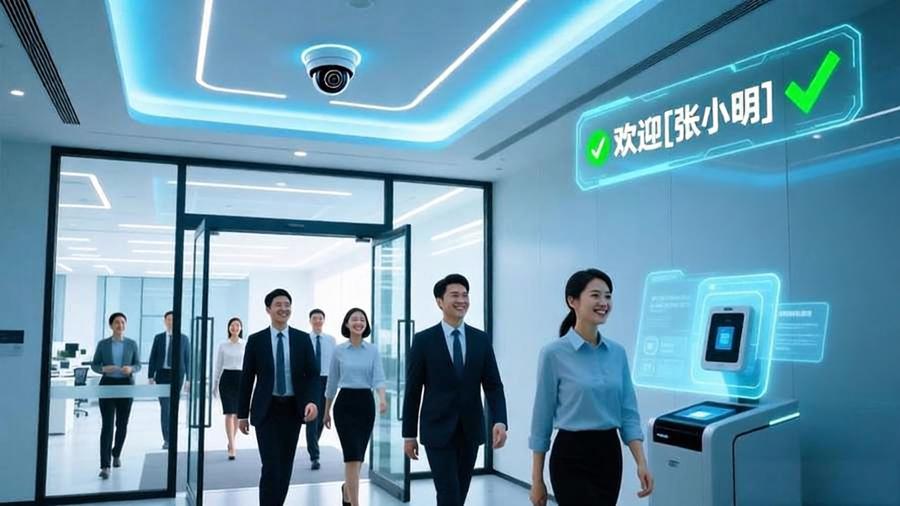
Attendance is a deceptively simple managerial act that has long been trapped in an awkward position: it is foundational enough to be unavoidable, yet it consumes a disproportionate share of time and labor; it is supposed to be objective, yet it has never fully escaped the shadows of proxy punching, favor-based clocking, and data distortion. Traditional card swipes and fingerprint scanners reduce a person to a gesture and a tag. Centralized facial recognition terminals introduce biometrics, but they create a new kind of friction—employees must pause, wait, and cooperate in front of a device. Attendance shifts from something one passes through to a task one must deliberately perform. The significance of a touchless attendance system built on edge-AI facial recognition cameras lies not in moving an old process onto a new screen, but in redefining, at the architectural level, how attendance comes into being: it ceases to be an action initiated by the person and becomes an automatic perception of the person’s natural passage through space.
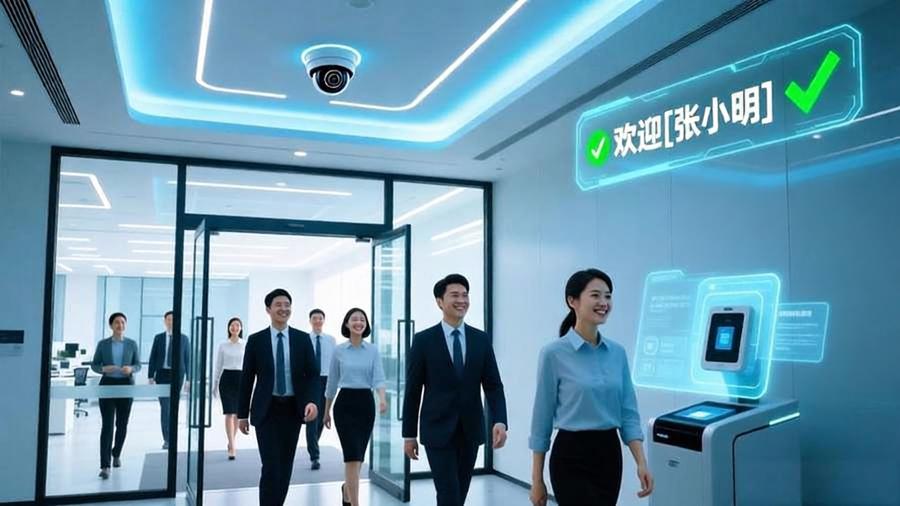
I. Edge Intelligence: Pushing Recognition from the “Back End” to the “Front End”
The computational core of conventional facial recognition attendance systems is typically concentrated in back-end servers: cameras capture images, while face detection, feature extraction, and matching are performed remotely. This architecture can function in sparse, slow-paced environments, but it exposes its limits the moment attendance occurs at factory gates, office corridors, or campus entry points characterized by high density and rapid throughput. Bandwidth pressure from video backhaul, latency accumulation from network jitter, and queuing bottlenecks on the server side converge simultaneously.
Edge-AI facial recognition cameras rewrite this chain. Deep-learning-based face detection, feature extraction, and local matching are compressed into the camera’s embedded SoC or NPU. Face capture, quality filtering, embedding generation, and in-library retrieval close the loop inside the device itself, and recognition results are output directly without transmitting raw video streams or facial images to a remote server. On industrial-grade embedded platforms, a 5-megapixel edge facial recognition camera can host a local face library in the tens of thousands, with recognition speed within 120 milliseconds and accuracy no lower than 99.9%. Measured edge-computing implementations, using asynchronous multi-threaded NPU inference and a zero-copy image pipeline, have pushed end-to-end single-channel processing latency below 25 milliseconds while reducing CPU utilization from over 80% to under 25%.
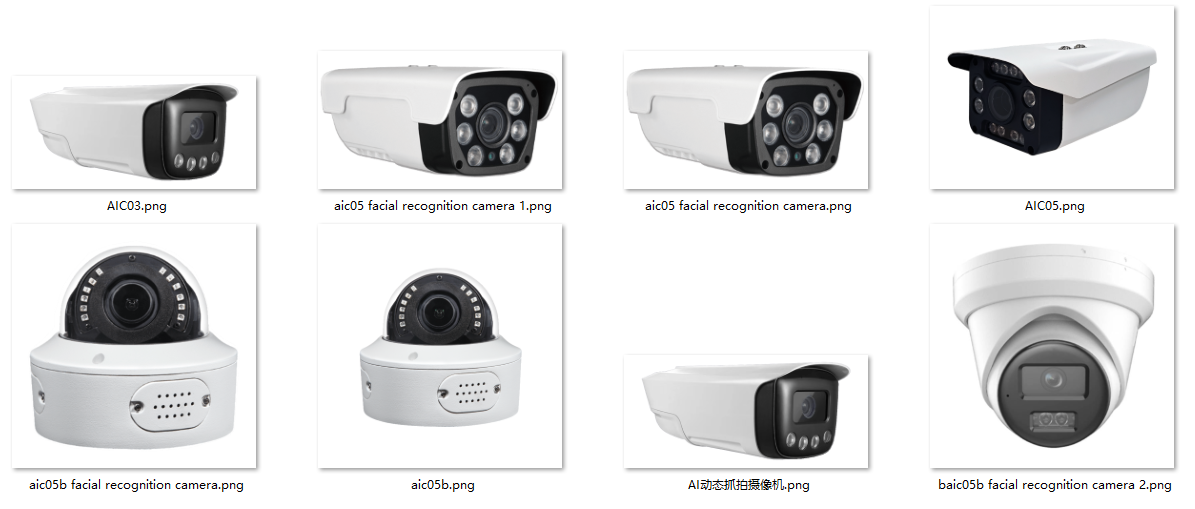
What this architectural shift delivers is not merely speed. When recognition happens inside the camera, the attendance system’s reliability decouples from network state: records are stored locally during outages and automatically re-synced once connectivity returns, so attendance data does not vanish because of a single switch failure. More importantly, facial features and matching remain on the device side. Raw biometric data need not leave the premises, establishing a structural foundation for the privacy and compliance discussion that follows.
II. The Engineering Substance of Touchless Passage: Walk Past at Pace, Attendance Is Already Done
“Recognition without stopping, while walking past at a brisk pace”—the phrase sounds simple, but it demands that an entire perception pipeline operate within an extremely narrow time window. A person walking briskly through a camera’s field of view may leave only a few hundred milliseconds of usable frames. The face angle may not be frontal, lighting may be suboptimal, and there may be interference from masks, glasses, or profile views.
Edge-based touchless attendance responds to this scenario through optimizations at three levels. First, face detection and tracking run continuously on the video stream, capturing moving faces at high frame rates rather than waiting for a “standard photograph” to appear. Second, quality assessment and de-duplication filter candidates at the moment of capture: low-quality frames are discarded in real time, and multiple captures of the same person retain only the best match result, preventing duplicate records and wasted computation. Third, matching itself is accelerated by the edge NPU, with embedding retrieval completed in milliseconds, so that “recognition” is no longer a waiting step in a process but something that happens concurrently with “passing by.” Commercial systems already support non-stop recognition under masks, profile angles, backlight, and partial occlusion, with algorithmic accuracy maintained above 99%. In other words, the person being recorded need not alter gait, look toward the lens, or perform any cooperative gesture—attendance is completed while the person is “not paying attention.”
III. Simultaneous Multi-Person Recognition: Liberating Attendance from “Queue Logic”
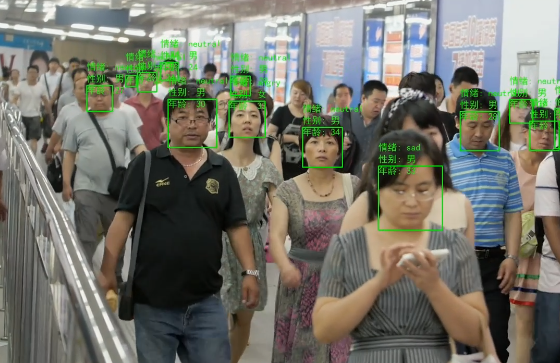
A system that recognizes people one at a time has not truly escaped the queue logic of “finish one, then process the next.” At the entrance of an office building during morning rush hour or at a factory corridor during shift change, serial processing degrades touchless attendance into a hidden form of congestion: people may not stop, but the system’s processing capacity determines the actual pace of passage.
Support for simultaneous multi-person detection and recognition is the step that moves touchless attendance from “functional” to “usable.” When an edge camera can concurrently capture, track, and match multiple faces within a single frame or a short temporal window, concurrency is no longer determined by “how long one person takes to pass” but by “how many people a frame can hold.” Mainstream edge solutions already achieve same-frame capture and recognition at dozens of faces per device, with some products explicitly supporting no fewer than 30 concurrent recognitions and distributed expansion that removes the single-device ceiling on millisecond-level response. Public specifications for Baidu’s Dumu intelligent camera report a recall rate above 99% and accuracy of 98.5% for 30-person same-frame capture in typical scenarios. In the 15-person simultaneous check-in scenario specified for this system, this concurrency means that a group walking through a corridor together can be fully identified and logged within a single perception window, without anyone slowing down or reordering because “someone ahead is being recognized.” For the first time, attendance throughput is decoupled from the rhythm of human walking.
IV. Absence and Return: Attendance Extended from an Instant Event to a Time Interval
If touchless attendance only recorded “who passed at what time,” it would remain a smoother substitute for conventional clocking. What moves the system into deeper managerial territory is its ability to detect absence from and return to a post.
In roles defined by presence—security posts, production workstations, service counters—“whether someone is at the post” carries more managerial weight than “whether someone showed up.” Edge-AI cameras, combining human pose estimation with ROI-based workstation detection, can continuously analyze on-post status: when a person leaves the predefined work area beyond a time threshold, the system marks an absence; when the person returns, it records the return time. Absence count and cumulative absence duration are then automatically accumulated, forming a traceable timeline of post status. The engineering challenge here lies not in single-frame classification but in temporal stability. Practical edge-computing implementations adopt a state-machine design that combines a sliding time window with hysteresis thresholds: brief posture shifts, standing up to retrieve an item, or a short phone call should not trigger an absence record; only sustained departure from the work area constitutes a valid event. With this strategy, composite recognition accuracy for absence and irregular behavior has been reported above 96.5%. It is important to be clear-eyed about the boundary: AI can observe visible posture and presence within a defined region; it cannot “judge whether someone is working diligently.” What it can do is provide an objective, continuous, and quantifiable record at the level of “present/absent,” extending attendance from a discrete point-in-time event into a time-interval description of on-post status.
V. LAN Deployment and Real-Time Dashboard Statistics: Keeping Both Data Sovereignty and Perceptual Efficiency On-Site
A touchless attendance system handles employees’ facial biometrics and continuous location-state data—information whose sensitivity means the architecture cannot assume cloud connectivity as a default. LAN deployment means the business platform server, facial feature library, and attendance data all run within the organization’s internal network; cameras communicate with the platform over the local network or a dedicated network, and attendance records and state data never leave the intranet. Edge-based recognition narrows the exposure surface even further: raw facial images can be discarded immediately after feature extraction inside the camera, with only structured identity tokens and timestamps entering the business system, so the retention scope of biometrics themselves is minimized. For organizations attentive to compliance with personal information protection laws and to data sovereignty, this is not an add-on feature—it is a precondition for whether the system can be deployed at all.
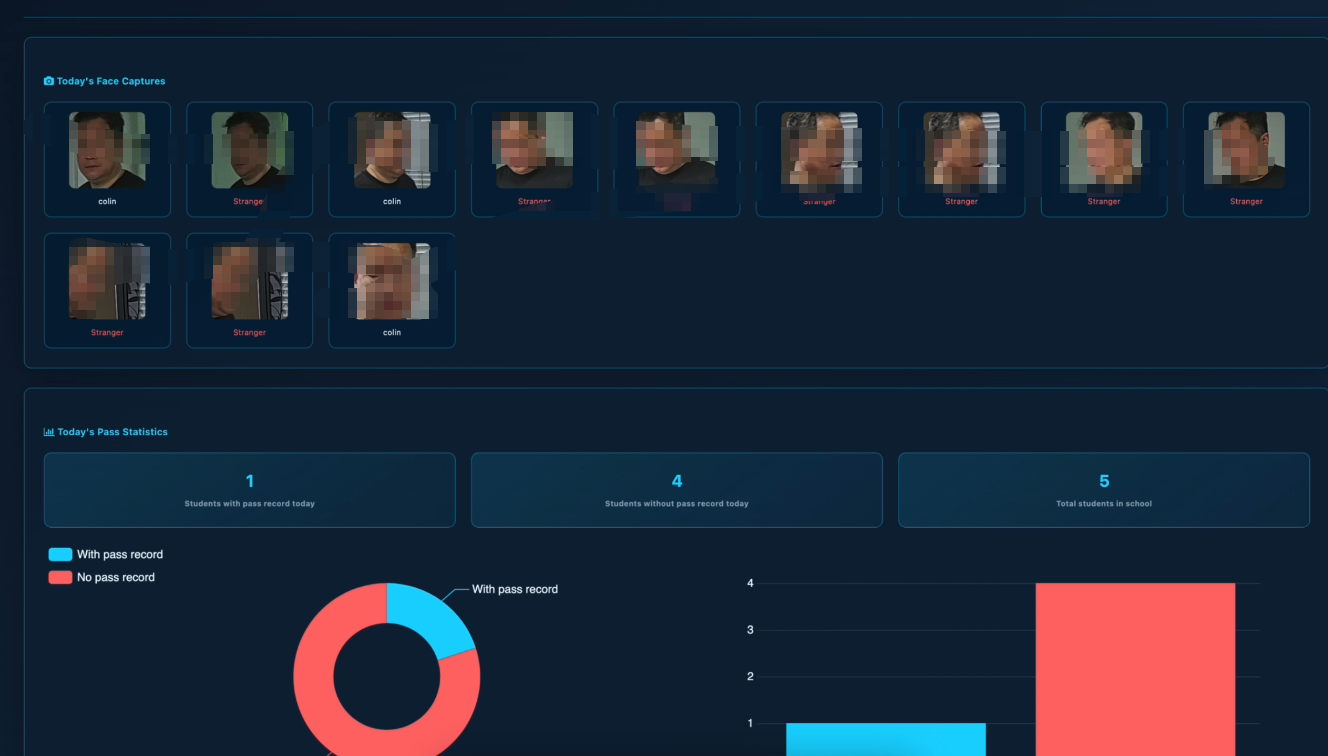
Complementing LAN deployment is the managerial visibility delivered by large-screen real-time attendance statistics. A live dashboard can freely select which cameras to project, displaying each passing person’s identity, similarity score, and capture snapshot so that on-site managers can immediately confirm recognition status. At a broader level, the system aggregates real-time attendance counts, on-post rates, and anomaly states by time period, department, or attendance point, refreshing continuously on a large display in chart or split-screen form. This short “sense—aggregate—present” loop transforms attendance from a month-end statistical report into an operational signal that can be observed and acted upon at any moment.
VI. Boundaries and Honesty: Where Touchless Attendance Should Stand
Any technology that operates under the banner of “automatic perception” owes honesty about its limits. The very strength of touchless attendance is also its ethical tension: it requires no cooperation from the person, which means a person may be recorded without knowing the precise moment of recognition. Sound deployment should therefore observe several basic constraints: install cameras in duty areas, not in public rest areas; target “on-post status” rather than “behavioral evaluation”; discard raw video after edge analysis and retain only the minimal structured data required for attendance; and use absence statistics for scheduling and safety assurance, not for automatically generating punitive conclusions. Precision metrics—recognition rates above 99%, millisecond-level response, 15-person or even 30-person concurrency—deserve serious attention, but the more fundamental question is whether an organization knows what it is measuring, what it is protecting, and what it must not violate with that precision.
Globally, biometric attendance is shifting from an optional tool to a component of workplace digital infrastructure, with contactless and touchless modalities accelerating in hygiene-sensitive and high-turnover environments. The long-term value of an edge-AI facial recognition touchless attendance system is not that it saves a few seconds at clock-in, but that it returns attendance from an action that must be “performed” to a trace left by a person’s natural presence in space. When technology recedes behind perception, management can finally obtain a genuinely clean, continuous, and trustworthy picture of who is present, when, and where it matters.
Questions
Do I need to stay during facial recognition attendance? Do I need to clock in in front of the camera?
No need. Just walk past the facial recognition camera at normal walking speed, without stopping or checking in specifically. Facial detection and recognition can be completed within 100ms without any additional coordination actions.
How to detect the number and duration of absences from work?
Install facial recognition cameras at the main entrances and exits of offices and factory workshops, in both directions of entry and exit. When employees leave, the facial recognition camera in the exit direction will capture their faces and detect their departure from work; When the employee returned, the imported camera detected that the employee was on duty. The time period in between is calculated as the length of absence from work. All departure and arrival times are uploaded to the attendance system, where the employee's departure time, departure frequency, and departure duration can be clearly and accurately queried. How to detect the number and duration of absences from work?