 Zhcloudlink
Home / News / Contactless Attendance & Visitor Platform Upgrades with AI Video Analytics: Ordinary Cameras Can Now Run Multi-Algorithm Analysis in the Cloud
News
Contactless Attendance & Visitor Platform Upgrades with AI Video Analytics: Ordinary Cameras Can Now Run Multi-Algorithm Analysis in the Cloud
—A three-in-one architecture integrating the attendance platform, streaming media platform and GPU algorithm platform, with no dedicated cameras or edge computing boxes required The contactless attendance and visitor platform has completed a major feature upgrade with the launch of AI video analytics. With this upgrade, users only need to add ordinary network cameras in the platform and push their video streams to the streaming media server. The platform then obtains the online raw media stream
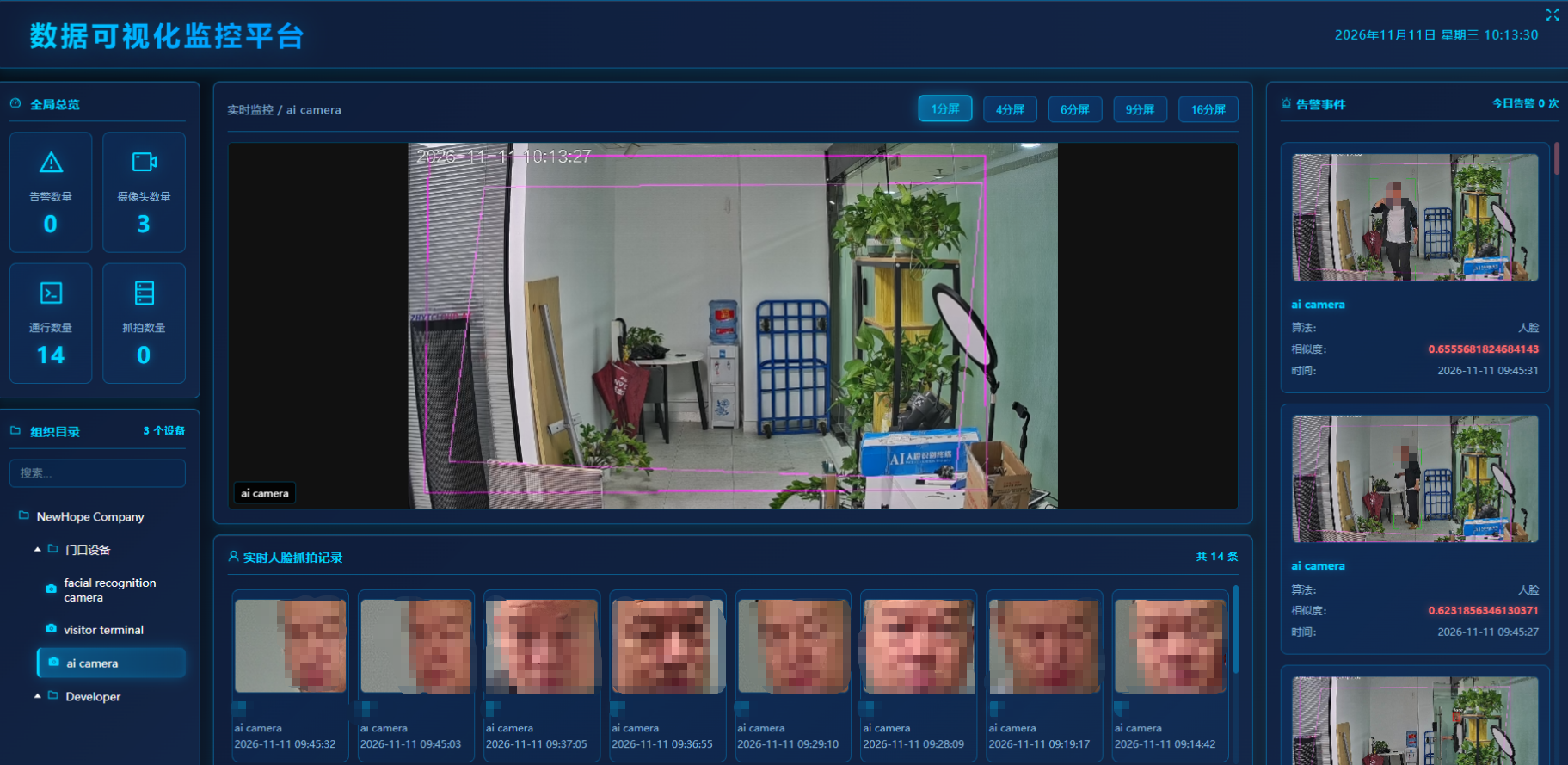
The contactless attendance and visitor platform has completed a major feature upgrade with the launch of AI video analytics. With this upgrade, users only need to add ordinary network cameras in the platform and push their video streams to the streaming media server. The platform then obtains the online raw media stream and configures video analytics algorithm tasks as needed. The tasks and raw streams are sent to GPU compute servers, where ONNX models run to perform detection and analysis. The results are returned in real time to the contactless attendance AI platform, which can display them live, notify administrators, or push them to third-party platforms.
Compared with traditional intelligent video analytics solutions, the key advantage of this upgrade is that ordinary network cameras can be used directly, eliminating the need to purchase dedicated smart cameras. Algorithms run on cloud GPU compute servers, so no edge computing boxes need to be deployed on site. As a result, the contactless attendance and visitor platform, the streaming media platform and the GPU algorithm model platform form a three-in-one collaborative analytics architecture. While reusing existing devices as much as possible, it provides flexible intelligent capabilities for attendance, visitor management and broader video analytics scenarios.
For a long time, contactless attendance and visitor management have mainly focused on identity recognition, access records, visitor appointments and entry/exit management. Cameras have largely played the role of “seeing” and “recording.” Although video data is continuously generated, deep analytics capabilities often depend on dedicated smart cameras or edge computing devices, which can lead to higher deployment costs and less flexible algorithm expansion. The new AI video analytics upgrade enables the platform to perform structured and event-based analysis on video streams on top of its existing attendance and visitor services. The platform no longer only records “who passed and when”; based on algorithm tasks configured by users, it can also detect and analyze people, behaviors, environments, vehicles and other targets in the video, and return the results to the business platform in real time. This means that video streams from ordinary network cameras can be included in a unified intelligent analytics workflow, further unlocking the value of existing devices.
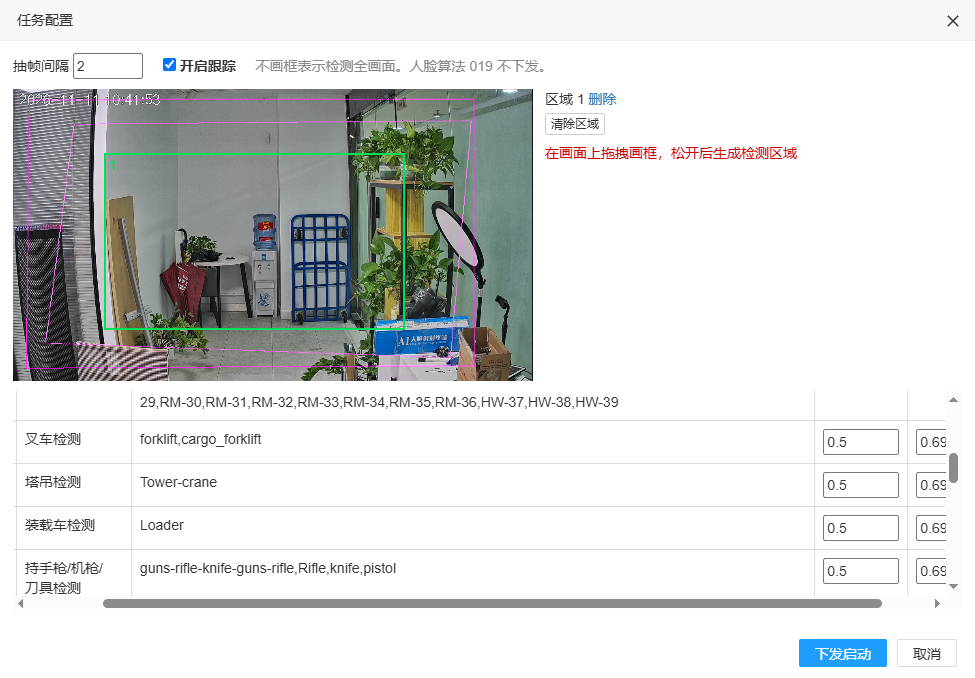
According to the product team, this upgrade is not simply an additional algorithm entry point. It connects the complete chain of “camera access—streaming media forwarding—algorithm task configuration—GPU compute analysis—result return—business display and notification.” Users can add cameras and configure algorithm tasks within the platform. The platform sends the tasks and raw media streams to GPU compute servers, where ONNX models perform inference and analysis. The detection and analysis results are then returned to the contactless attendance AI platform. The entire process is scheduled by the platform, results can be displayed in real time, and notifications can be sent to administrators or pushed to third-party platforms according to business rules.
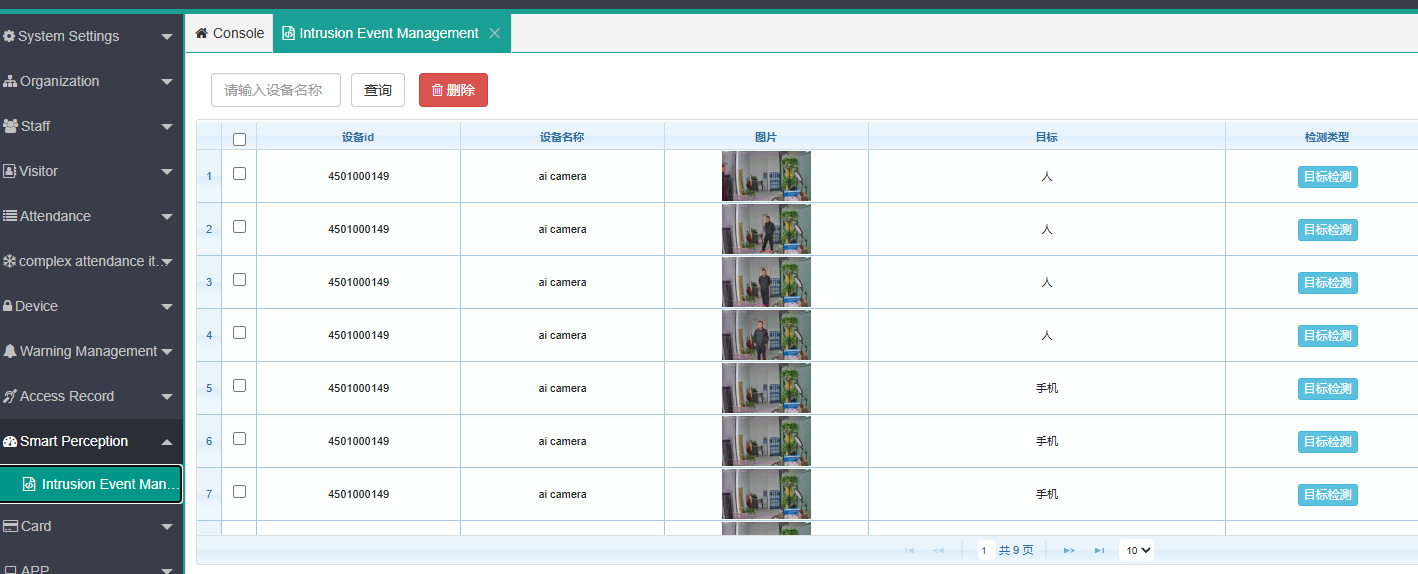
In traditional solutions, users who want video analytics often need to choose dedicated cameras with AI functions or deploy edge computing boxes locally. Although dedicated cameras and edge devices can offload some computing pressure, they also bring issues such as limited device selection, higher procurement costs, complex point expansion and inconvenient algorithm upgrades. This upgrade adopts an “ordinary camera + streaming media platform + cloud GPU compute” approach. Users only need to add cameras that support ordinary network video streams and push the streams to the streaming media server. The contactless attendance AI platform then obtains the online raw media stream. Next, users configure video analytics algorithm tasks in the platform, and the platform sends the tasks and raw streams to GPU compute servers. The GPU compute servers run ONNX models and support dozens of algorithm analyses, returning detection and analysis results to the contactless attendance AI platform. The platform displays the results in real time and can notify administrators or push them to third-party platforms according to configuration.
This workflow decouples device access, streaming media transmission, algorithm scheduling and business applications. Cameras handle capture, the streaming media platform handles access and forwarding, GPU compute servers handle model inference, and the contactless attendance AI platform handles task configuration, result display and business linkage. Users do not need to replace dedicated cameras or deploy edge computing boxes locally to use cloud algorithm capabilities on demand. For scenarios that already have ordinary network cameras deployed, this approach offers clear value by reusing existing equipment. For new points, users can also flexibly choose camera models and quantities according to actual needs.
After this upgrade, the contactless attendance AI platform, the streaming media platform and the GPU algorithm model platform form a three-in-one collaborative analytics system. The contactless attendance AI platform serves as the business entry point, responsible for camera management, algorithm task configuration, result display, administrator notification and third-party platform push. The streaming media platform is responsible for video stream access, forwarding and raw stream output, providing a stable video source for algorithm analysis. The GPU algorithm model platform relies on GPU compute servers to run ONNX models and carry dozens of algorithm analysis tasks. The advantage of this architecture lies in clear responsibilities and efficient collaboration. The streaming media platform solves the problem of video “coming in and being transmitted reliably”; GPU compute servers solve the problem of models “running and computing quickly”; the contactless attendance AI platform solves the problem of business “being visible and usable.” With the three working together, users do not need to separately maintain complex streaming links and algorithm runtime environments, but can complete configuration and viewing within a unified platform.
At the same time, because algorithms run on cloud GPU compute servers, computing resources can be scheduled according to task and point requirements. This avoids the device dispersion, complex operations and inconvenient expansion caused by deploying edge computing boxes at every camera or every point. The ONNX model format also facilitates the access and operation of different algorithm models, providing a foundation for expanding more analytics algorithms in the future. At present, the platform supports dozens of algorithm analyses, covering personnel detection, behavior analysis, area management, environmental safety, vehicles and objects, and other directions. Users can configure them on demand according to business scenarios.
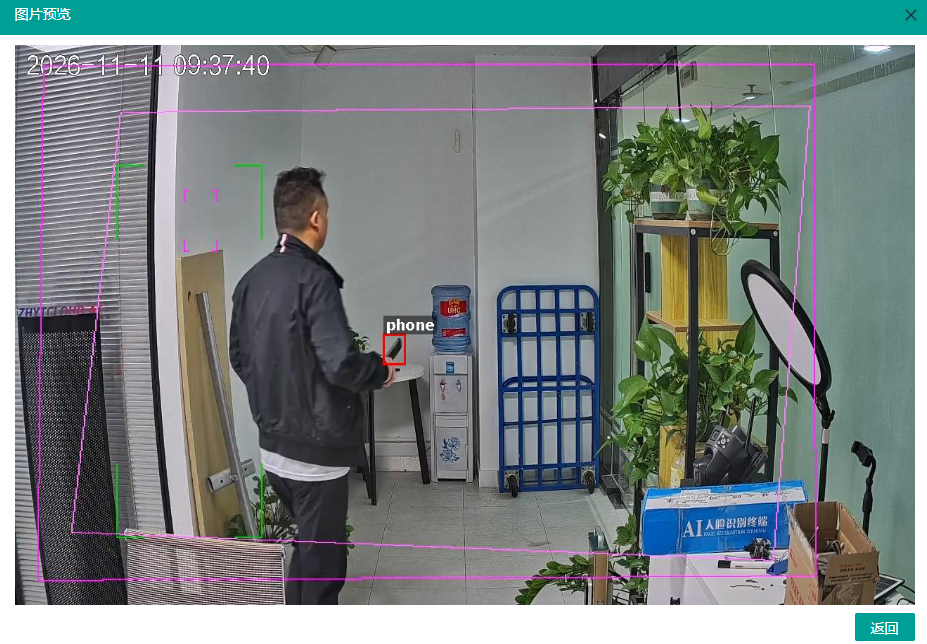
The ability to use ordinary cameras without edge computing boxes further lowers the deployment threshold for AI video analytics. For users, existing ordinary network cameras can continue to be used, and new points do not have to be tied to dedicated cameras. Algorithm capabilities are centralized on cloud compute servers, making subsequent algorithm task adjustments and expansion more flexible. This approach is particularly suitable for scenarios with scattered points, a large number of existing cameras, and a desire to introduce video analytics with minimal modification. In attendance and visitor management scenarios, AI video analytics can complement existing services. For example, the platform can configure corresponding algorithm tasks at entrances and exits, visitor reception areas and office areas to analyze personnel activities, area status and abnormal events, and return results to the platform in real time. Administrators can view analysis results on the platform or receive platform notifications to stay informed. For users who need to link with third-party business systems, the platform can also push analysis results to third-party platforms, providing data input for more business processes.
In addition to attendance and visitor scenarios, this capability can also be extended to campuses, office buildings, factories, construction sites, communities and other scenarios with ordinary network cameras. The platform can configure different algorithm tasks for different areas and business objectives to achieve multiple types of analysis, including people, behavior, environment and vehicles. Because algorithms run on cloud GPU compute servers, users do not need to configure edge computing boxes separately for each point, making deployment and operations more centralized.
This upgrade emphasizes not only algorithm analysis but also the application and linkage of results. After GPU compute servers complete detection and analysis, results are returned to the contactless attendance AI platform, which can display them in real time and notify administrators or push them to third-party platforms. As a result, video analytics results no longer remain inside the algorithm server but enter the business platform, becoming business information that can be viewed, notified and circulated. In terms of platform design, the contactless attendance AI platform focuses on permission management and business boundaries. Camera access, task configuration, result viewing and third-party push can all be managed within the unified platform. For scenarios involving video streams and business data, the platform emphasizes on-demand configuration, permission grading and process traceability, helping users maintain control over data flows and business use while introducing AI video analytics. Third-party platform push can also be configured according to user business needs, avoiding new information silos.
The product team stated that AI video analytics is not a replacement for the existing attendance and visitor business, but an enhancement of the platform’s perception and business linkage capabilities. The contactless attendance and visitor platform still takes attendance, visitor and access management as its business foundation. By connecting the streaming media platform and the GPU algorithm model platform, it converts video streams from ordinary cameras into usable analysis results and feeds them back to the business platform and third-party systems. This collaborative model of “business platform + streaming media platform + GPU algorithm model platform” helps users obtain more flexible algorithm configuration and more centralized operations while controlling device costs.
The AI video analytics upgrade marks the extension of the contactless attendance and visitor platform from identity recognition and access records to intelligent video analytics. Users only need to add ordinary network cameras, push video streams to the streaming media server and configure algorithm tasks. GPU compute servers then run ONNX models to complete dozens of algorithm analyses, and results are returned in real time to the platform for display, administrator notification or third-party push. Ordinary cameras can be used directly, no dedicated cameras are required, no edge computing boxes are needed, and the three-in-one collaborative analytics architecture provides a new option for attendance and visitor management and broader video analytics scenarios. In the future, the contactless attendance and visitor platform will continue to improve algorithm task configuration, result display, notification linkage and third-party integration, building a more efficient collaborative channel between ordinary network cameras and cloud GPU compute, so that more existing video devices can obtain scalable intelligent analytics capabilities without replacing dedicated hardware.
Questions
What is the biggest change in this upgrade?
The contactless attendance and visitor platform now supports AI video analytics. It can connect ordinary network cameras, push video streams to the streaming media server, configure algorithm tasks on demand, and send them to GPU compute servers running ONNX models. Results are returned in real time for platform display, administrator notification or third-party push.
Do users need to replace their cameras with dedicated AI cameras?
No. The solution supports ordinary network cameras. Users can push video streams to the streaming media server and connect to the analytics workflow without purchasing dedicated smart cameras.
Is an on-premises edge computing box required?
No. Algorithms run on cloud GPU compute servers, where ONNX models perform the analysis. This avoids deploying edge computing boxes at every point.
How does the video analytics workflow operate?
Cameras stream to the streaming media server. The platform obtains the online raw media stream and configures algorithm tasks. The tasks and raw streams are sent to GPU compute servers, which run ONNX models and return results to the contactless attendance AI platform.
How can the analysis results be used?
The platform can display detection and analysis results in real time, notify administrators according to rules, and push results to third-party platforms for linkage with attendance, visitor management and other business processes. The platform supports dozens of algorithm analyses, and specific algorithms can be configured by scenario.